反射
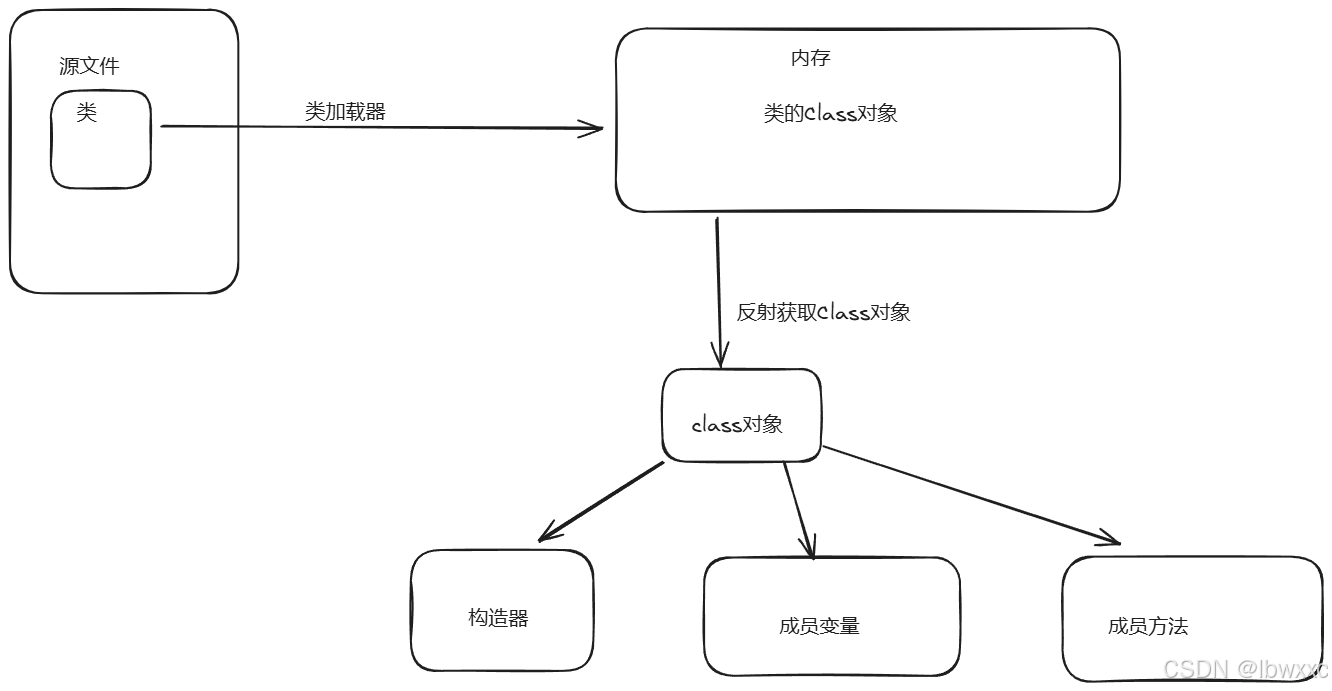
实体类
1
2
3
4
5
6
7
8
9
10
11
12
13
14
15
16
17
18
19
20
21
22
| @NoArgsConstructor
public class Student {
private String name;
private int age;
public Student(String name, int age) {
this.name = name;
this.age = age;
}
public void hello () {
System.out.println("Hello, I'm " + name + ", " + age + " years old.");
}
public String study () {
return "I'm studying.";
}
public void eat(String EatName) {
System.out.println(this.name + " is eating " + EatName);
}
}
|
Class对象
1
2
3
4
5
6
7
8
9
| @Test
public void test() throws ClassNotFoundException {
Class<Student> studentClass01 = Student.class;
Class<?> studentClass02 = Class.forName("com.example.Student");
Student student = new Student();
Class<? extends Student> studentClass03 = student.getClass();
System.out.println(studentClass01 == studentClass02);
System.out.println(studentClass02 == studentClass03);
}
|
运行结果发现输出为真说明类的class对象在内存中是唯一的
类的构造器
1
2
3
4
5
6
7
8
9
10
11
12
13
| @Test
public void constructorStudy() throws Exception {
Class<Student> studentClass = Student.class;
Constructor<?>[] constructors = studentClass.getDeclaredConstructors();
Constructor<Student> declaredConstructor = studentClass.getDeclaredConstructor(String.class, int.class);
System.out.println(Arrays.toString(constructors));
System.out.println(declaredConstructor);
System.out.println(declaredConstructor.getParameterCount());
Student student = declaredConstructor.newInstance("Tom", 18);
System.out.println(student);
}
|
可以通过反射获取构造器来构造对象
类的方法
1
2
3
4
5
6
7
8
9
10
11
12
13
| @Test
public void methodStudy() throws Exception {
Class<Student> studentClass = Student.class;
Method[] declaredMethods = studentClass.getDeclaredMethods();
Method hello = studentClass.getDeclaredMethod("hello");
Method study = studentClass.getDeclaredMethod("study");
Method eat = studentClass.getDeclaredMethod("eat", String.class);
Student student = studentClass.getDeclaredConstructor(String.class, int.class).newInstance("Tom", 18);
hello.invoke(student);
Object invoke = study.invoke(student);
System.out.println(invoke);
eat.invoke(student, "apple");
}
|
1
| Method.invoke(Object obj, Object... args)
|
通过class对象获取类的方法,但在使用方法时,要指名那个对象
类的成员变量
1
2
3
4
5
6
7
8
9
10
11
12
13
14
15
16
17
| @Test
public void FieldStudy() throws NoSuchMethodException, InvocationTargetException, InstantiationException, IllegalAccessException {
Class<Student> studentClass = Student.class;
Constructor<Student> declaredConstructor = studentClass.getDeclaredConstructor(String.class, int.class);
Student student = declaredConstructor.newInstance("Tom", 18);
Field[] declaredFields = studentClass.getDeclaredFields();
declaredFields[0].setAccessible(true);
declaredFields[1].setAccessible(true);
declaredFields[0].set(student, "Jerry");
declaredFields[1].set(student, 20);
System.out.println(student);
System.out.println(declaredFields[0].get(student));
System.out.println(declaredFields[1].get(student));
}
|
注解
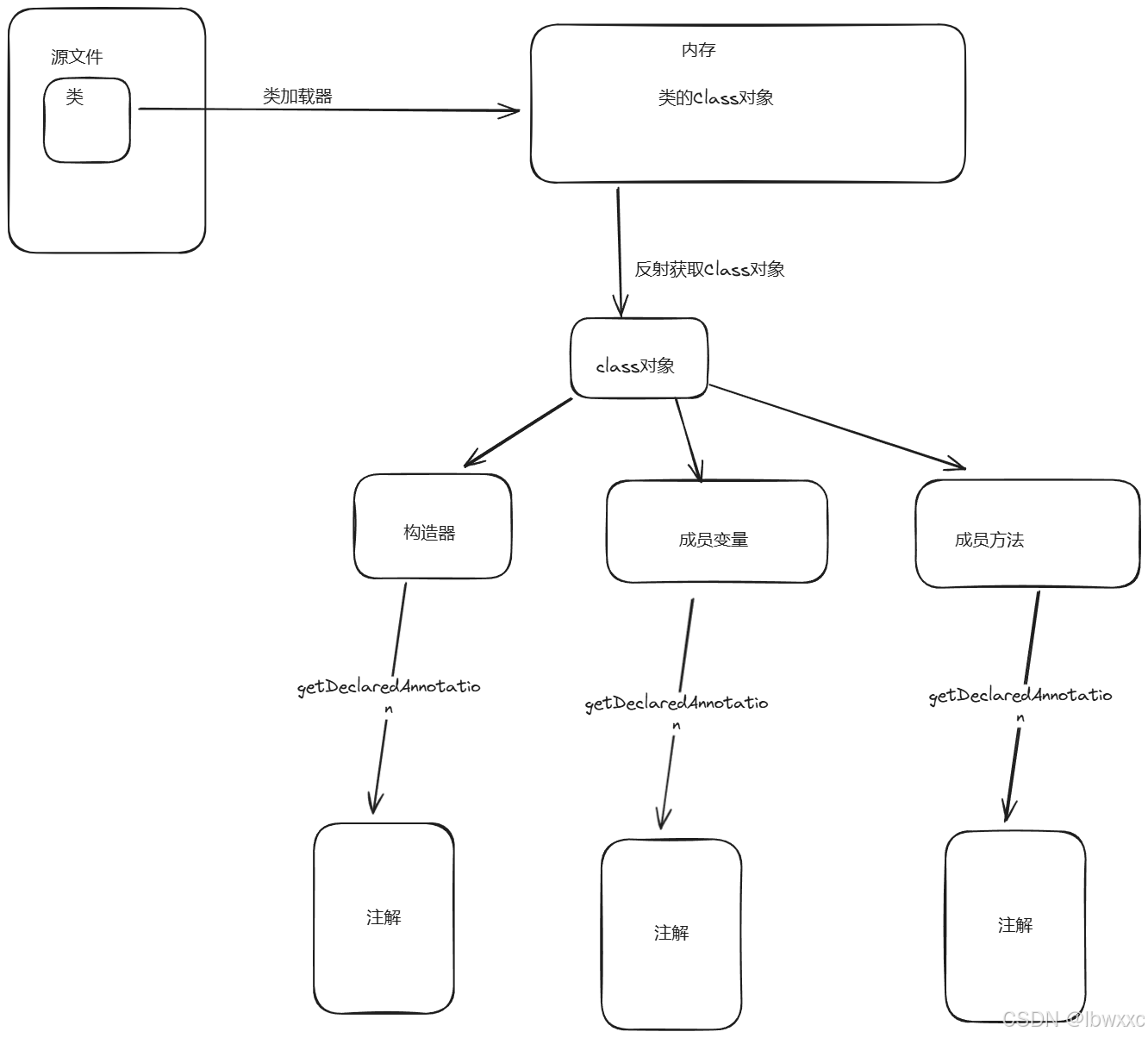
注解是提供一种为程序元素设置元数据的方法,理解起来还是一样的,程序元素就是指接口、类、属性、方法,这些都是属于程序的元素,那啥叫元数据呢?就是描述数据的数据(data about data)
注解的作用
- 作为特定标记,用于告诉编译器一些信息,例如@Override
- 编译时动态处理,如动态生成代码
- 运行时动态处理,作为额外信息的载体,如获取注解信息
注解的分类
1
2
3
4
5
6
7
8
| @Target({ElementType.TYPE, ElementType.METHOD})
@Retention(RetentionPolicy.RUNTIME)
public @interface MyAnn {
String value();
double aaa() default 100;
String[] bbb();
}
|
- @Retention:从编写Java代码到运行主要周期为
源文件→ Class文件 → 运行时数据,@Retention则标注了自定义注解的信息要保留到哪个阶段,分别对应的value取值为SOURCE →CLASS→RUNTIME
- @Target:允许自定义注解标注在哪些Java元素上(类、方法、属性、局部属性、参数…)
通过反射获取注解
Demo
1
2
3
4
5
6
7
8
9
| @MyAnn(value = "Hello", aaa = 1, bbb = {"a", "b"})
public class Demo {
@MyAnn(value = "world", aaa = 2, bbb = {"c", "d"})
public void test(){
}
}
|
MyAnn
1
2
3
4
5
6
7
8
9
| @Target({ElementType.TYPE, ElementType.METHOD})
@Retention(RetentionPolicy.RUNTIME)
public @interface MyAnn {
String value();
double aaa() default 100;
String[] bbb();
}
|
1
2
3
4
5
6
7
8
9
10
11
12
13
14
15
16
17
| @Test
public void parseClass() {
Class<Demo> c = Demo.class;
if (c.isAnnotationPresent(MyAnn.class)) {
MyAnn declaredAnnotation = c.getDeclaredAnnotation(MyAnn.class);
double aaa = declaredAnnotation.aaa();
String[] bbb = declaredAnnotation.bbb();
String value = declaredAnnotation.value();
System.out.println(aaa);
System.out.println(Arrays.toString(bbb));
System.out.println("value: " + value);
} else {
System.out.println("No Annotation");
}
}
|
编写MyTest以实现Test功能
1
2
3
4
5
6
7
8
9
10
11
12
13
14
15
16
17
18
19
20
21
22
23
24
25
26
27
28
29
30
31
32
| public class Res {
public void test01() {
System.out.println("hello world 01");
}
@MyTest
public void test02() {
System.out.println("hello world 02");
}
public void test03() {
System.out.println("hello world 03");
}
@MyTest
public void test04() {
System.out.println("hello world 04");
}
public static void main(String[] args) throws InvocationTargetException, IllegalAccessException {
Res res = new Res();
Class<? extends Res> aClass = res.getClass();
Method[] declaredMethods = aClass.getDeclaredMethods();
for (Method declaredMethod : declaredMethods) {
if (declaredMethod.isAnnotationPresent(MyTest.class)) {
declaredMethod.invoke(res);
}
}
}
}
|
注解原理初探
1
2
3
4
5
6
7
8
| @Target({ElementType.TYPE, ElementType.METHOD})
@Retention(RetentionPolicy.RUNTIME)
public @interface MyAnn {
String value();
double aaa() default 100;
String[] bbb();
}
|
将上述代码的class文件反编译后
1
2
3
4
5
6
7
8
9
10
11
12
13
| package com.example.Ann;
import java.lang.annotation.Annotation;
public interface MyAnnextends extends Annotation
{
public abstract String value();
public abstract double aaa();
public abstract String[] bbb();
}
|
可以看出注解本质是一个接口